
App overview
Aurral is a self-hosted app for music discovery and playback. It keeps a canonical index of readable Aurral and optional Lidarr library files.
Main sections
Section titled “Main sections”Discover
Section titled “Discover”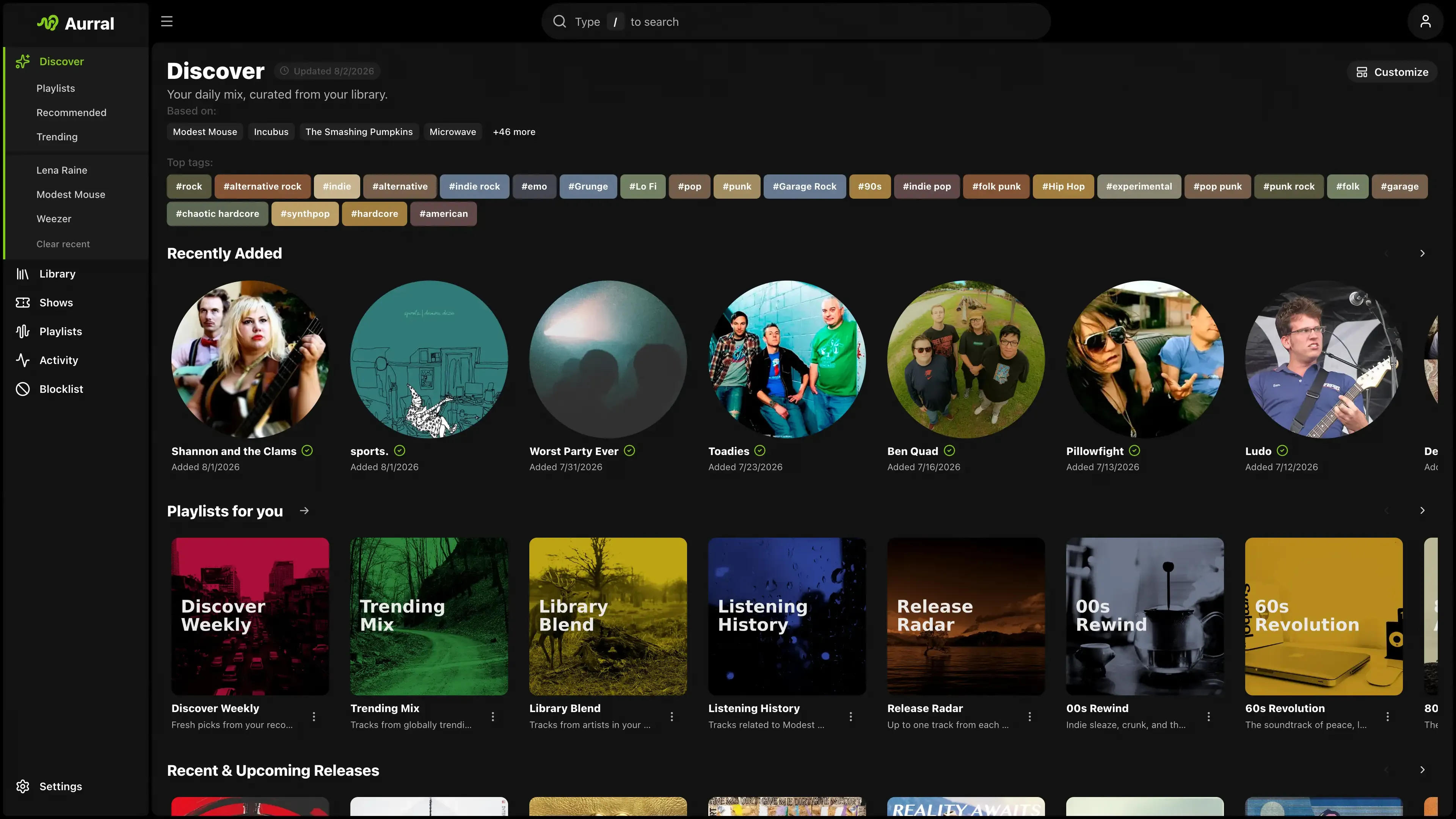
Discover shows recommendations, trends, tags, recent releases, playlists, new artists, and nearby shows.
Each user can select and arrange the sections.
The Inbox icon beside the profile menu collects library-based release updates, nearby shows, optional artist news, and personalized discoveries. It keeps read, saved, dismissed, and added state per user.
Search
Section titled “Search”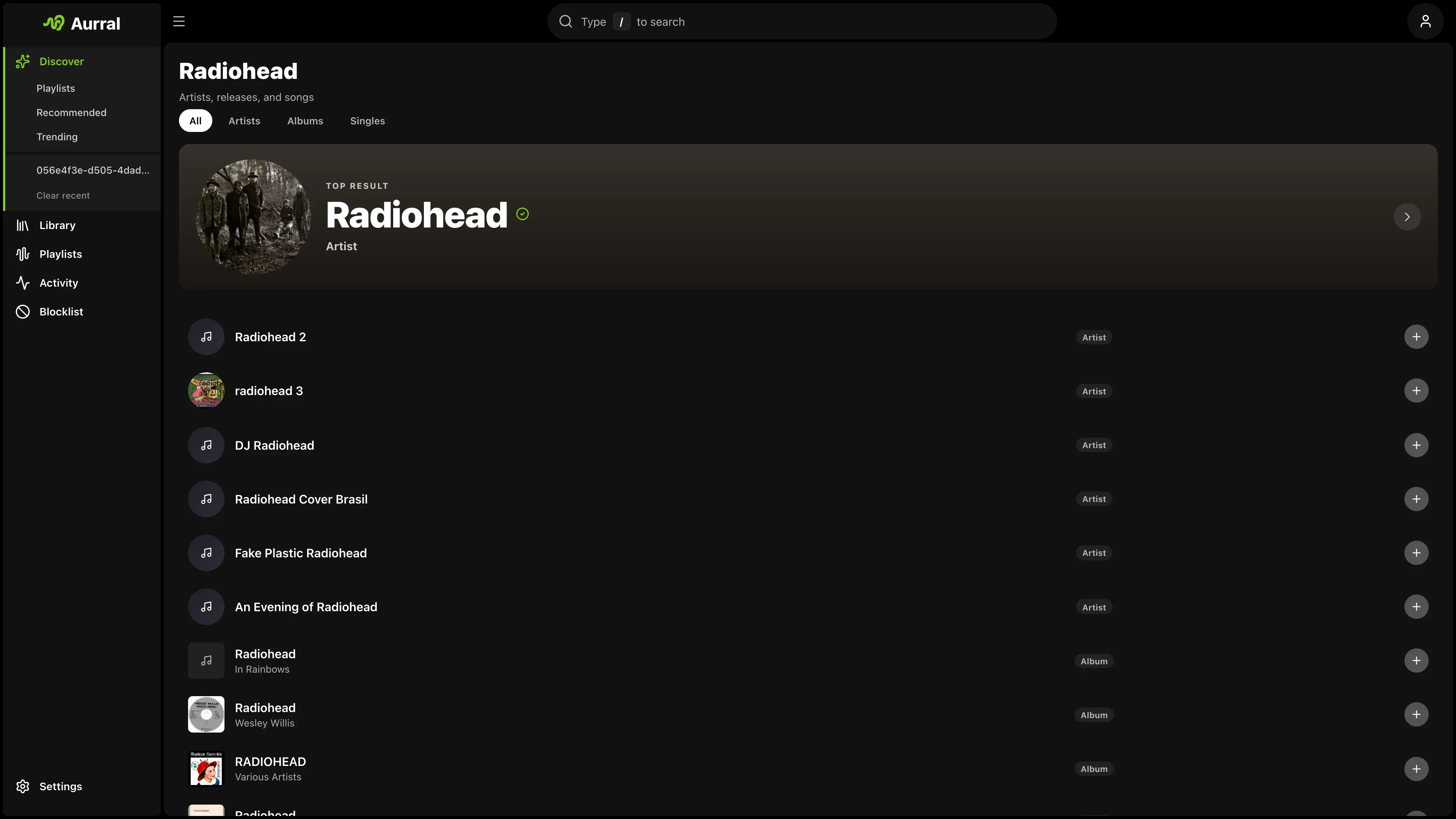
Use Search to find artists, albums, and tags. You can preview tracks, check library status, open a canonical Library page, and add items to Lidarr.
Library
Section titled “Library”Library shows the canonical music index built from readable Aurral and Lidarr files. It includes search, sort controls, artwork, favorites, playable tracks, missing-file states, and artist and album pages. Artist and album actions that change the managed library still go through Lidarr.
Playlists and Flows
Section titled “Playlists and Flows”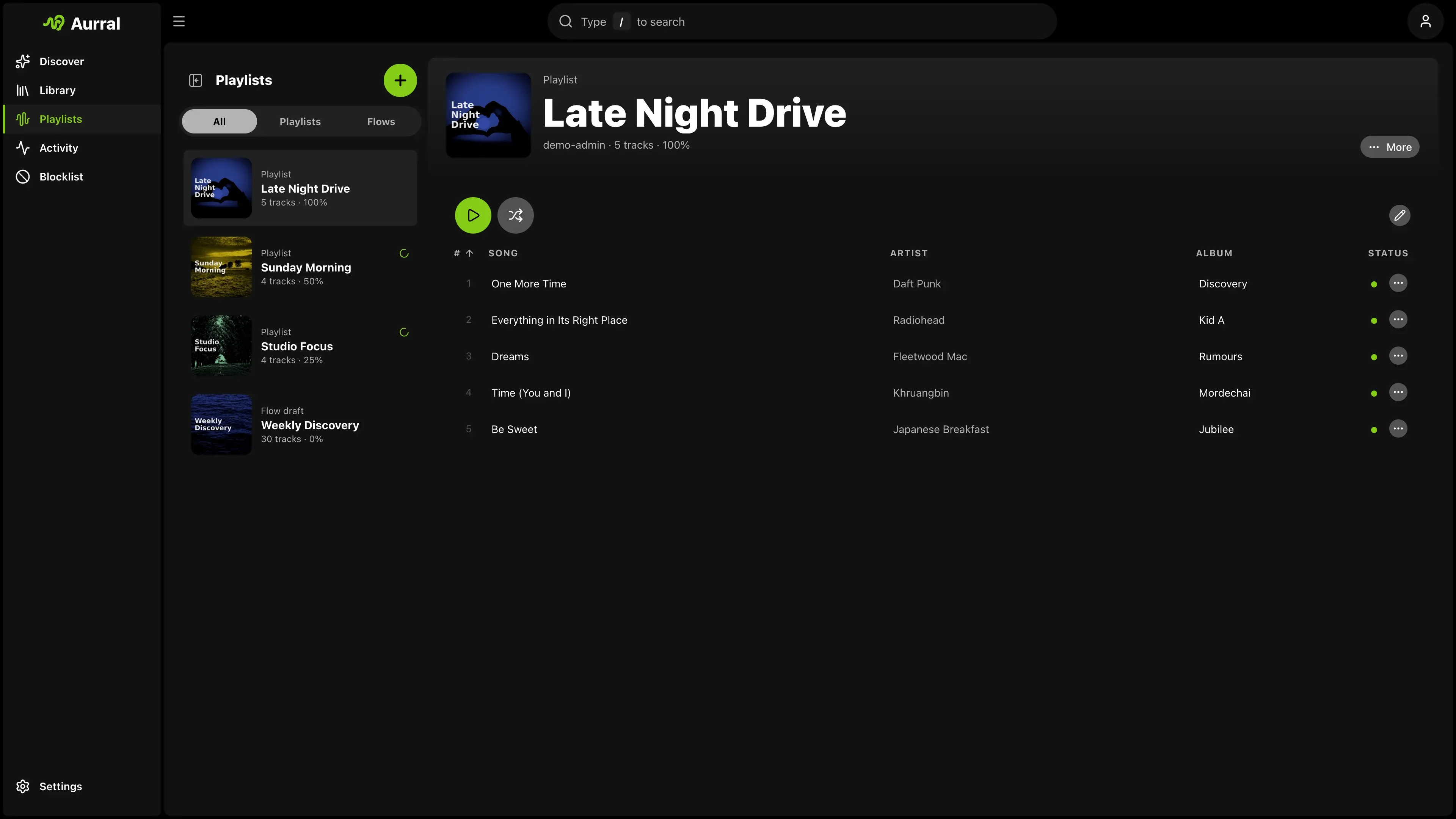
Library > Playlists contains static playlists, in-app playback, and their download status. Flows is a separate section for scheduled discovery mixes.
Flows regenerate on a schedule. Static playlists keep fixed tracklists or synchronize with Spotify, Last.fm, or ListenBrainz. You can play canonical Library tracks and accessible flow or playlist tracks in Aurral. Navidrome, Plex, and other Subsonic clients are optional destinations.
Activity
Section titled “Activity”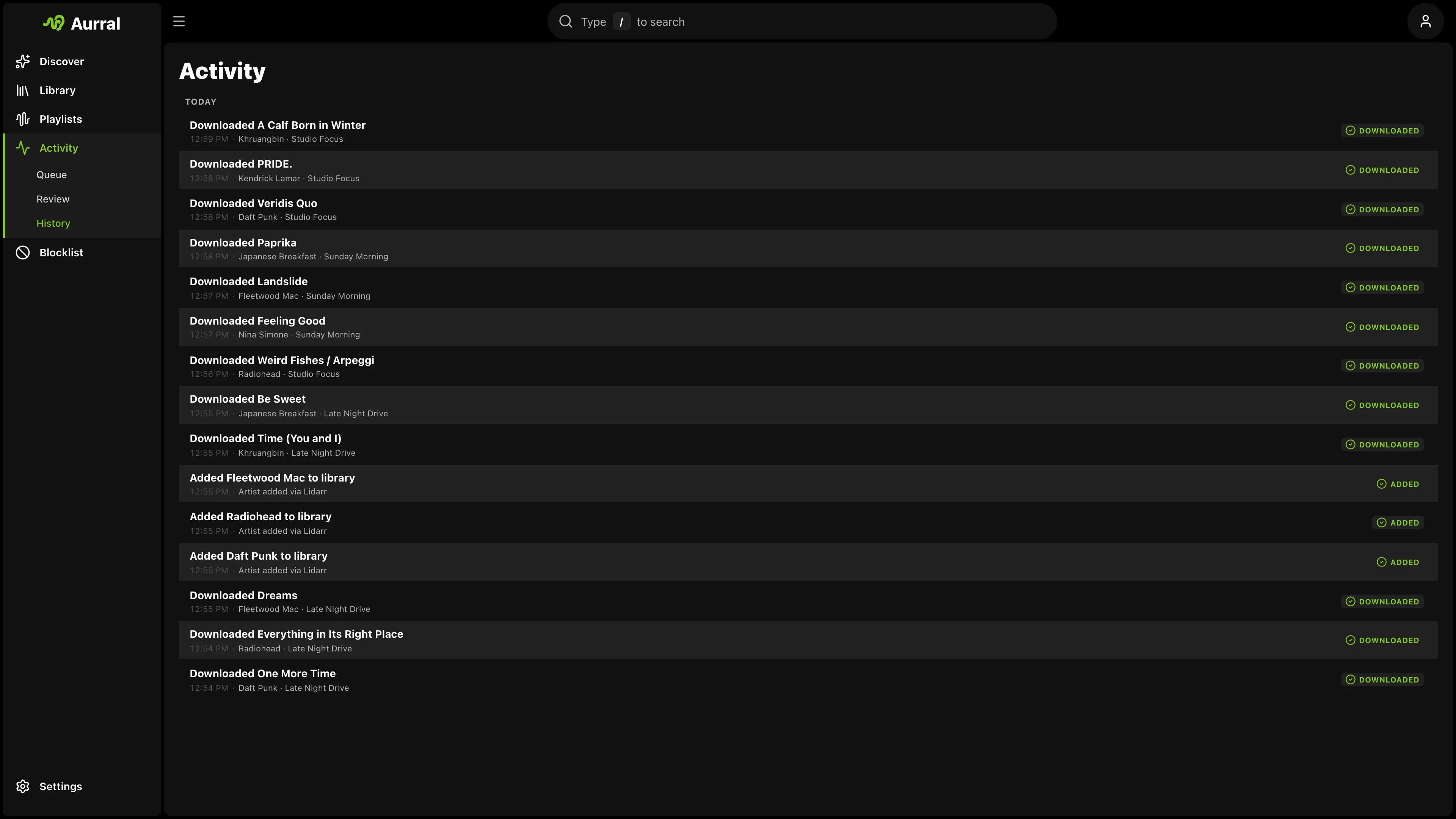
When Lidarr is configured, Activity shows its requests alongside download client activity and Aurral playlist jobs.
Queue combines active work with tracks waiting for review. History shows completed and failed events. Wanted shows Aurral-owned tracks that need another search or a quality upgrade.
Blocklist
Section titled “Blocklist”Manage the artists that Aurral excludes from recommendations, playlist previews, and future playlist downloads.
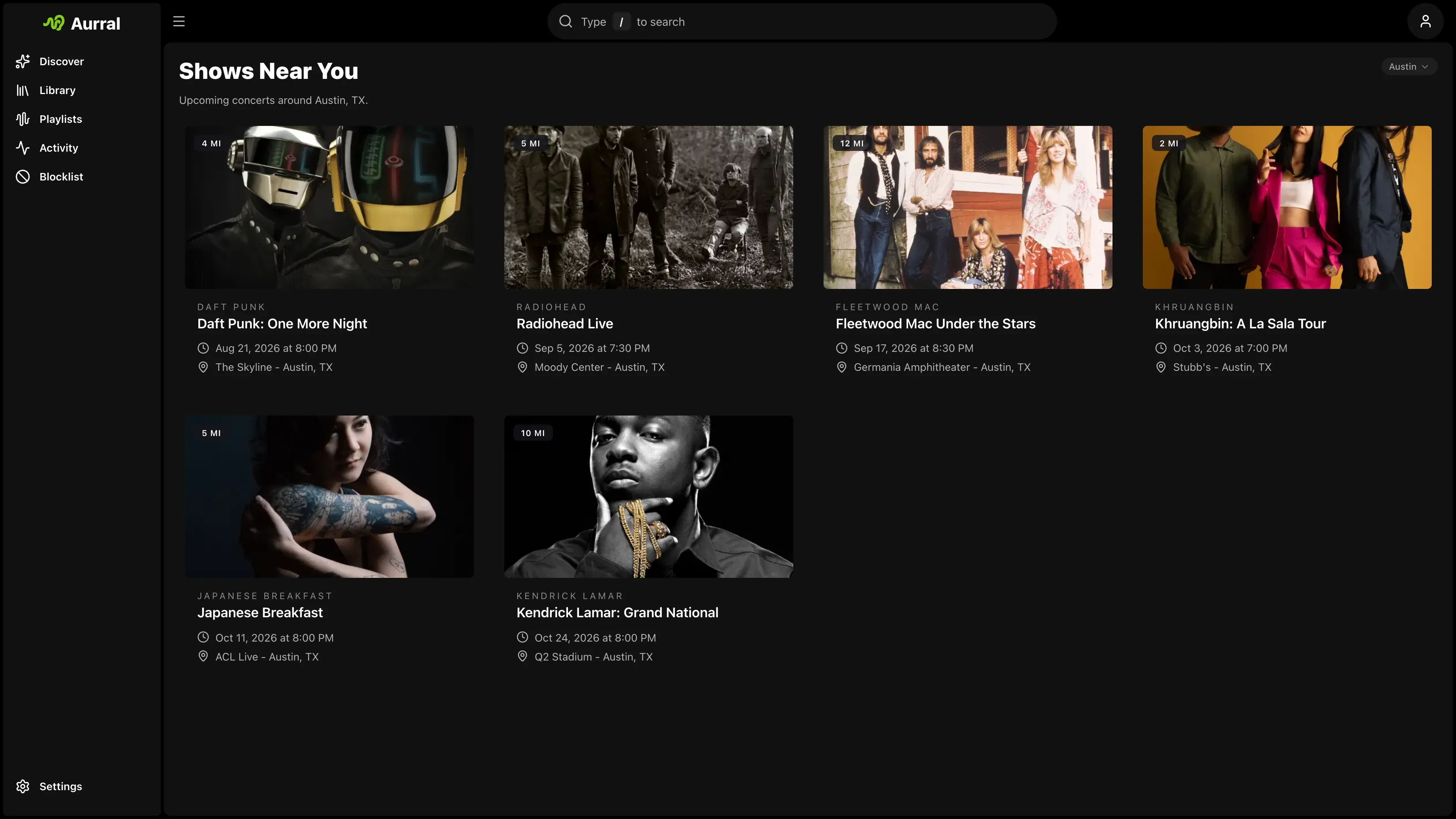
When you configure Ticketmaster, this section shows nearby concerts for specified artists.
Profile
Section titled “Profile”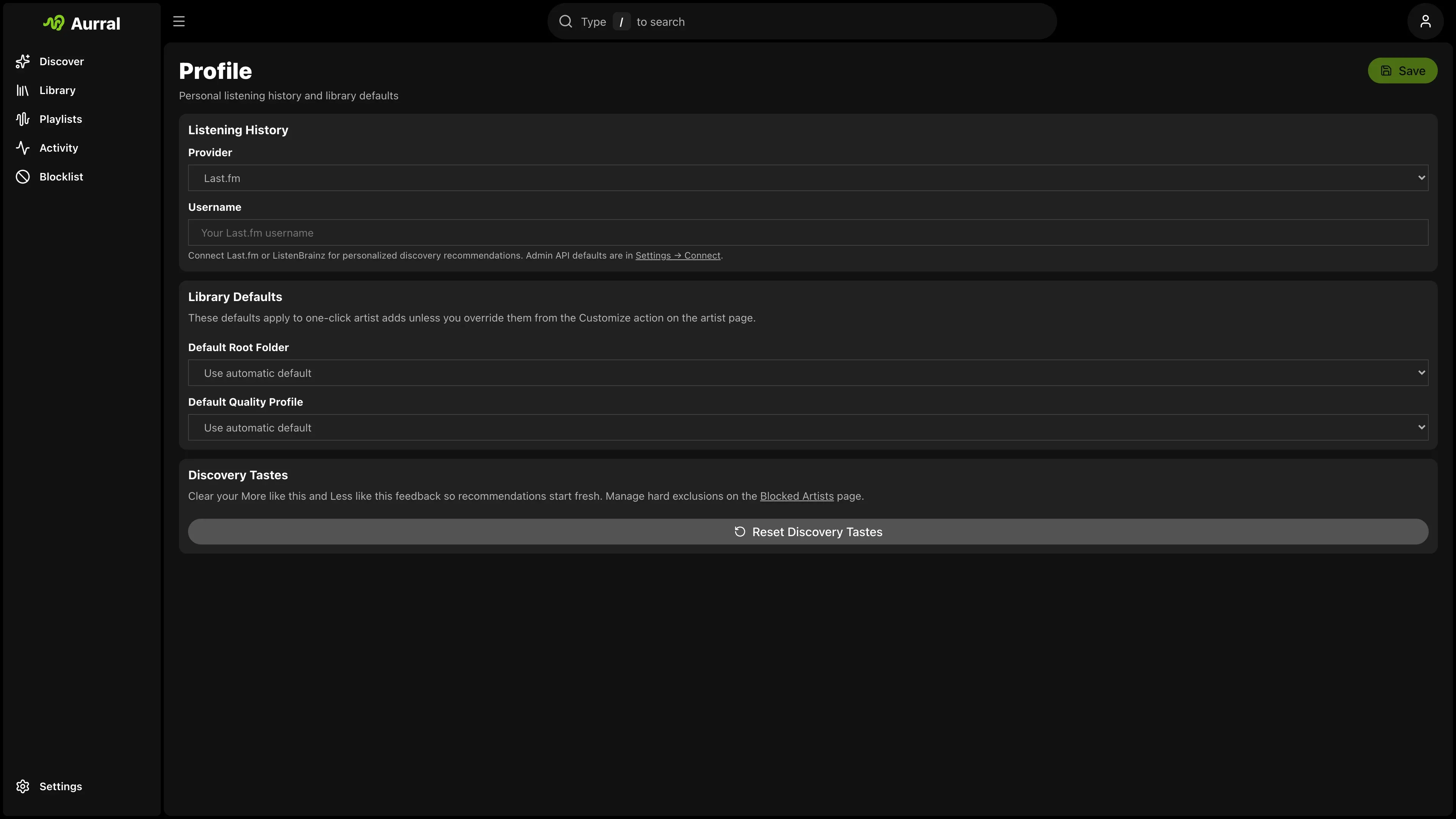
Profile contains appearance, listening history, Lidarr defaults, and personal preferences. Under Appearance, choose a built-in palette, System, Light, or Dark mode. Aurral saves the selection on the current device. Browse the pre-existing terminal.sexy color schemes, preview them, and select them like any other theme. Matching light and dark schemes share one card and follow the selected mode; use Find a scheme to search the collection, preview results, and add the ones you want to keep in a modal.
Aurral supports Last.fm, ListenBrainz, and Koito history.
Settings
Section titled “Settings”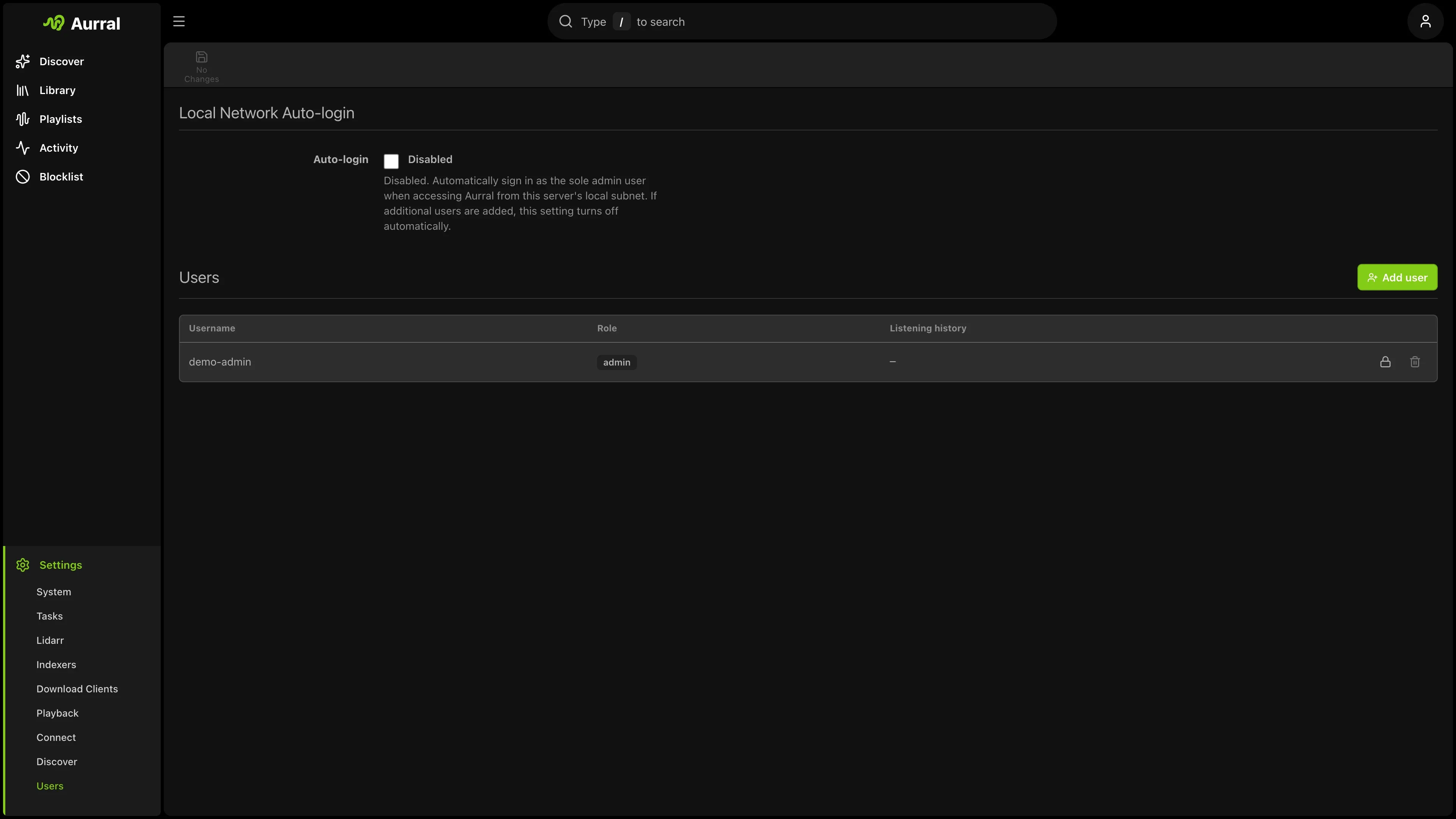
Settings contains the admin configuration. The page has these tabs:
| Tab | What it covers |
|---|---|
| System | Runtime details, display format, Subsonic behavior, and API access |
| Storage health | Library, download, playback, and disk checks |
| Tasks | Scheduled jobs and worker management |
| Lidarr | Lidarr connection, profiles, tags, and library access |
| Indexers | Prowlarr connection, indexer management, and search priorities |
| Download clients | yt-dlp, slskd, SABnzbd, NZBGet, source priority, and quality |
| Playback | Navidrome, Plex, scrobbling, and cover art |
| Discover | Recommendation refresh, mode, and generated playlists |
| Connect | Gotify, webhooks, Last.fm, Ticketmaster, and Inbox |
| RSS news | RSS feeds and feed groups |
| Users | Accounts, permissions, and Plex links |
Settings and Profile changes save automatically after you edit them. Connection tests and sync actions remain separate actions.
Administrators can set dates and times to the browser default, day-first format, or year-first format under Settings > System > Display. The selected format applies to all users.
Advanced metadata settings are available at /settings/metadata. They do not appear in the main settings navigation.